Frege’s Curse
Analytic philosophy tried to factor human knowledge into logical atoms. Symbolic AI tried to compile a confusion.
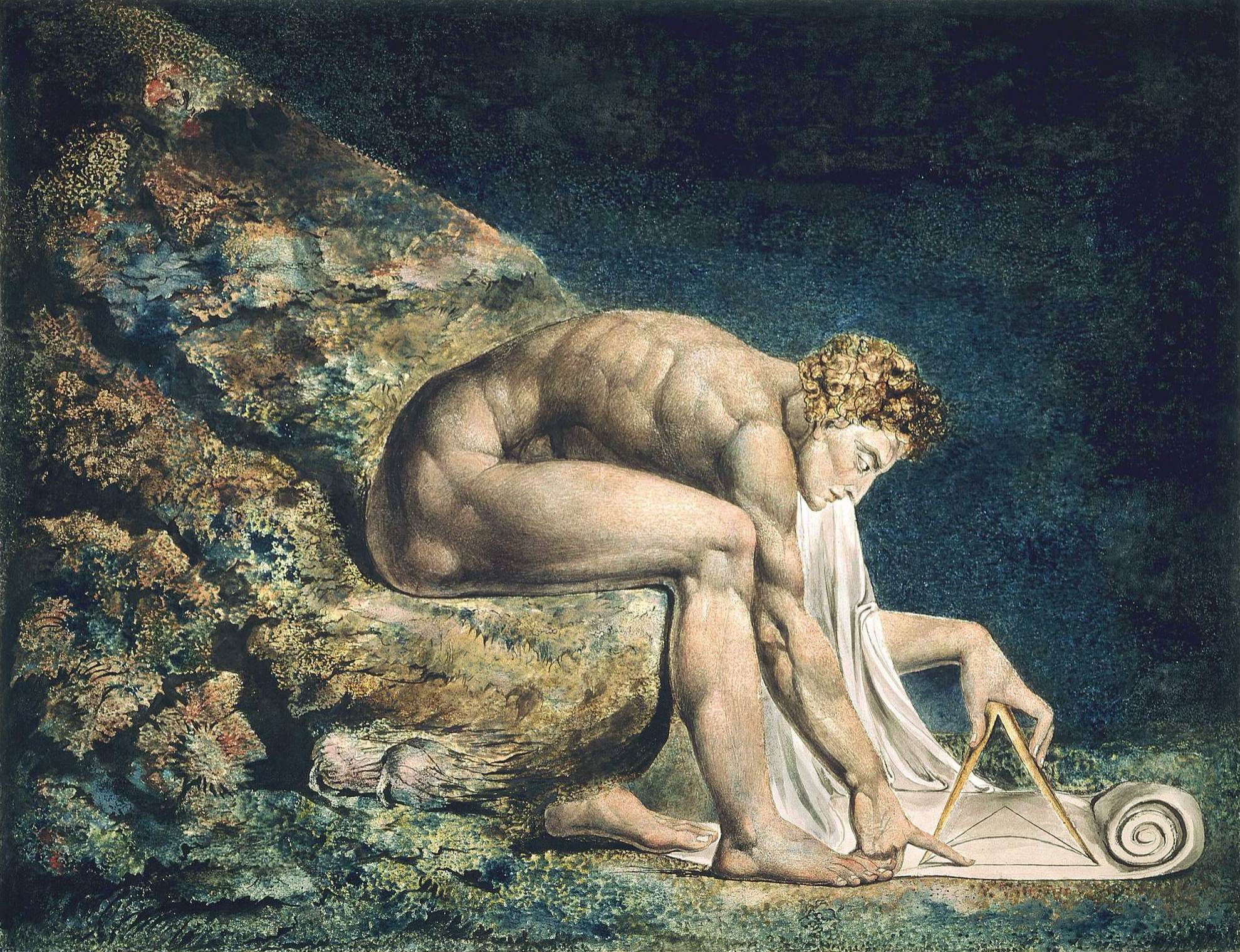
Every time a language model hallucinates or stumbles on a basic deduction, someone suggests going back to symbols, formal rules, and knowledge graphs. I think this mistakes a dead end for an unfinished project. Early AI borrowed Gottlob Frege’s formal notation and inherited his metaphysics along with it, faults and all.
Analytic philosophy began with an intellectually appealing confusion. Starting with Frege in 1879, and carried forward by Bertrand Russell, the early Wittgenstein, and the Vienna Circle, the tradition admired the cleanliness of mathematics and persuaded itself that ordinary language and human knowledge were muddy versions of formal logic. Scrub away the vagueness, give concepts sharp boundaries, break what we know down into logical atoms, and thought becomes mechanical calculation.
Human language and knowledge resist that kind of slicing. Vagueness, overlap, and context are the load-bearing structure of meaning. A word carries its weight through habit and lived experience, and a fact makes sense only inside everything else we already know - it is a multiplicity, not an atom. Try decomposing something ordinary like a chair or a joke into primitive predicates, and the thing you were trying to capture vanishes.
Even inside philosophy, the project buckled under its own weight. Wittgenstein spent his later career tearing up the logical atomism of his youth, showing that words get their meaning from messy social use and Quine argued that our beliefs face experience as an entangled web, tested together as a whole. Analytic philosophy retreated from its original programme in the 1950s while keeping the temperament, a lingering reflex to treat the messiness of reality as a notation problem. Right as philosophers were walking away from the dream, the founders of AI picked it up and tried to build minds out of it.
Continental philosophy saw through the illusion from the start. Heidegger and Merleau-Ponty began with the whole, recognising that we are always already inside a world whose pieces only make sense together. Hubert Dreyfus drew on this tradition in the 1960s to argue that symbolic AI would collapse. The field ignored him for decades and ran straight into the wall he had described.
You might expect symbolic methods and graphs to hold up better closer to physical reality, down near molecules and atoms. Even there, nature barely cooperates. Chemistry looks tidy as balls and sticks on a blackboard, while real molecular systems are continuous and entangled. Decades of formal modelling stalled on protein folding until deep learning cracked it. Defenders often point to mathematics, compilers, or board games, which only sharpens the indictment. Symbolic systems thrive there because humans legislated sharp boundaries into those domains beforehand. Succeeding inside a closed sandbox we invented ourselves is just another demonstration of how impotent the approach is in the real world.
Deep learning broke through across vision, language, and biology for the exact reason fifty years of symbolic engineering stalled. Its representational machinery matches how the world actually hangs together. A neural network distributes knowledge across continuous, high-dimensional spaces, letting concepts overlap, shift, and grade into one another. Inside a language model, a word carries its meaning through its position relative to everything else in context. That architecture mirrors the holism that continental philosophy described. By learning the entangled web whole from data, neural networks absorb tacit background, fuzzy boundaries, and endless exceptions natively. Their failures, from hallucinations to fragile deduction, are engineering limits inside a paradigm aligned with reality. Symbolic AI stalls because its underlying picture of knowledge is false.
That is why recent attempts to rescue symbolic methods and knowledge graphs by grafting deep learning onto them amount to squaring the circle. Neural networks work on real-world problems by leaving discrete conceptual atoms behind. Using them to prop up a Fregean scaffold smuggles the original mistake straight back in.
To borrow a line from Donald Trump, the world is a mess. It is loose, shifting, and indifferent to our axioms. Treating what we know about the world as a pile of logical atoms is a mental confusion. Analytic philosophy turned that confusion into a discipline, and symbolic AI predictably failed trying to compile it.