04
Transport geometryResearch project
Structured Universal Latent Transport
Structured Universal Latent Transport in LLMs
Transporting hidden states across LLMs through an anchored universal latent space
Core question
Can hidden states from one model be moved into another model in a way that preserves executable behavior rather than only reconstruction geometry?
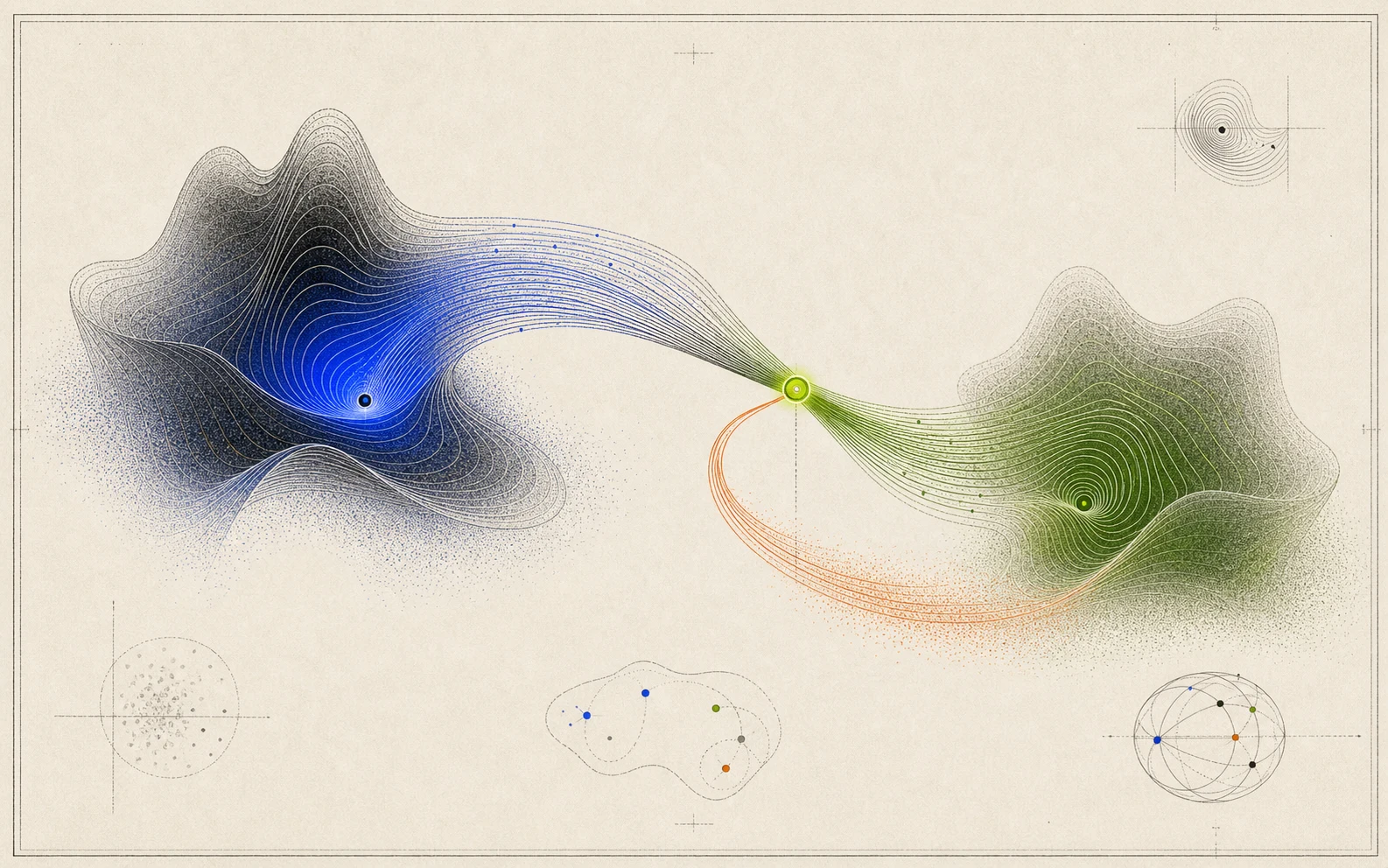
01
Aligned anchor
Preserve the high-fidelity route first.02
Router
Decide when universal structure should intervene.03
Residual bridge
Apply shared correction only where it improves behavior.How to read it
Anchored transport architecture
The anchor preserves local geometry while a router decides when universal residual structure is useful.
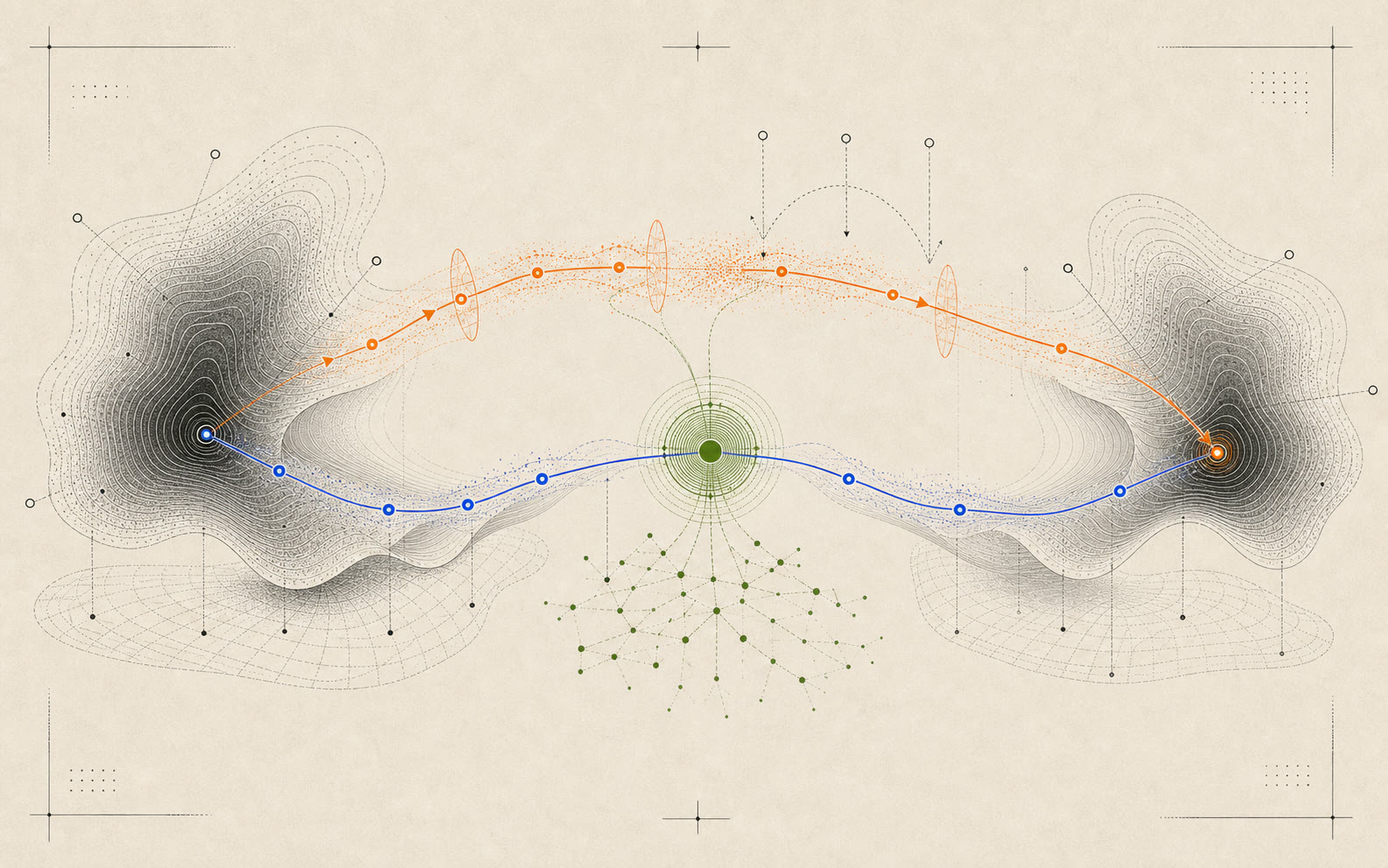
Source model
Start from a concrete hidden state.
The source state should not be flattened into a generic embedding before its useful local geometry is preserved.
Anchor and router
Keep the high-fidelity path open.
The router decides when the universal residual helps, instead of forcing every transfer through the same abstraction.
Target model
Re-enter the target geometry.
Useful transport is judged by behavior, not only by whether a reconstructed state looks close.
Design constraints
Transport should be selective, anchored, and behavior-aware.
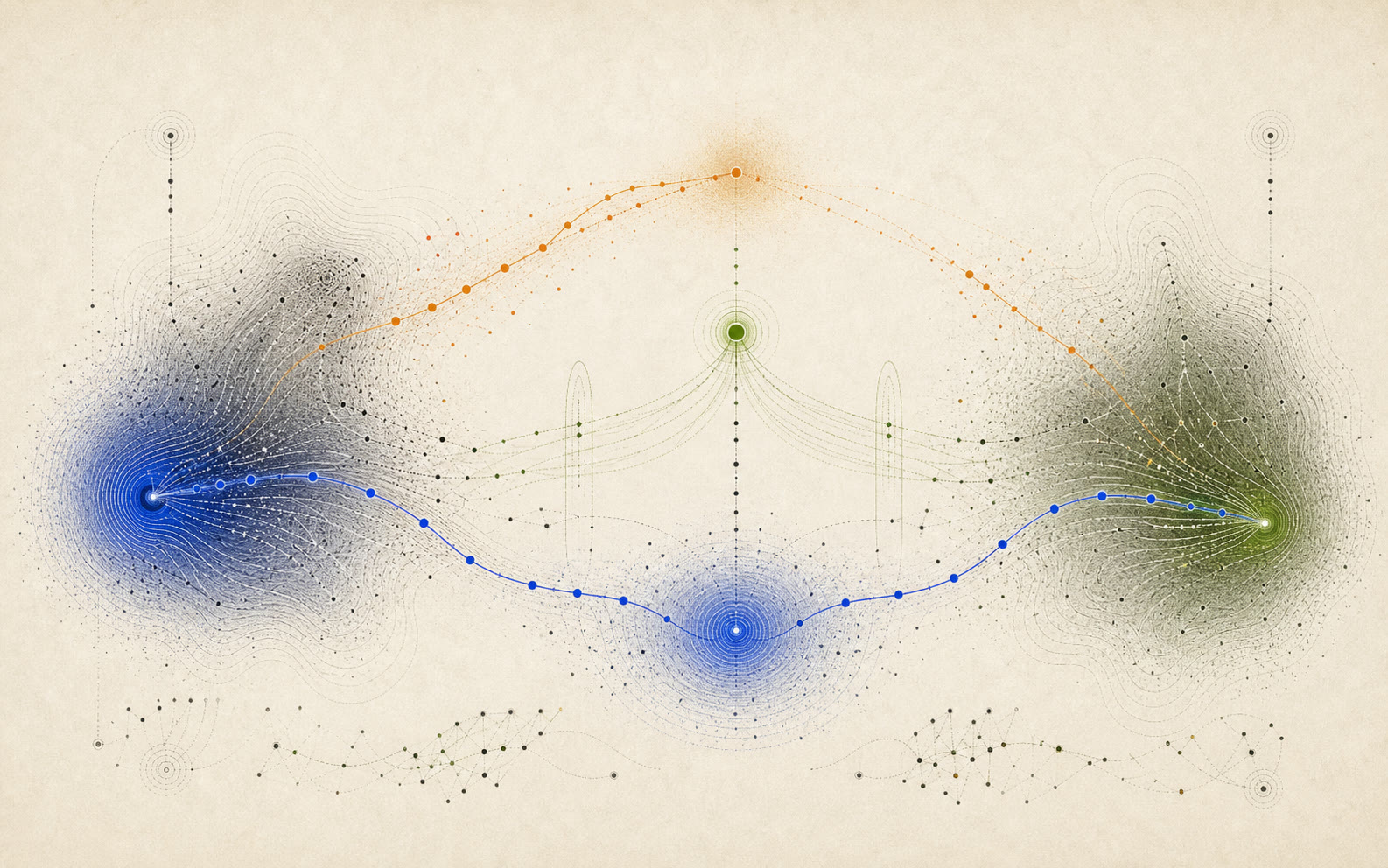
Aligned transport preserves high-fidelity routes and should remain the anchor.
Structured universal residuals can help harder benchmark regimes, but should be applied selectively.
Router targets need execution evidence, not only reconstruction regret, to align hidden-state transport with behavior.
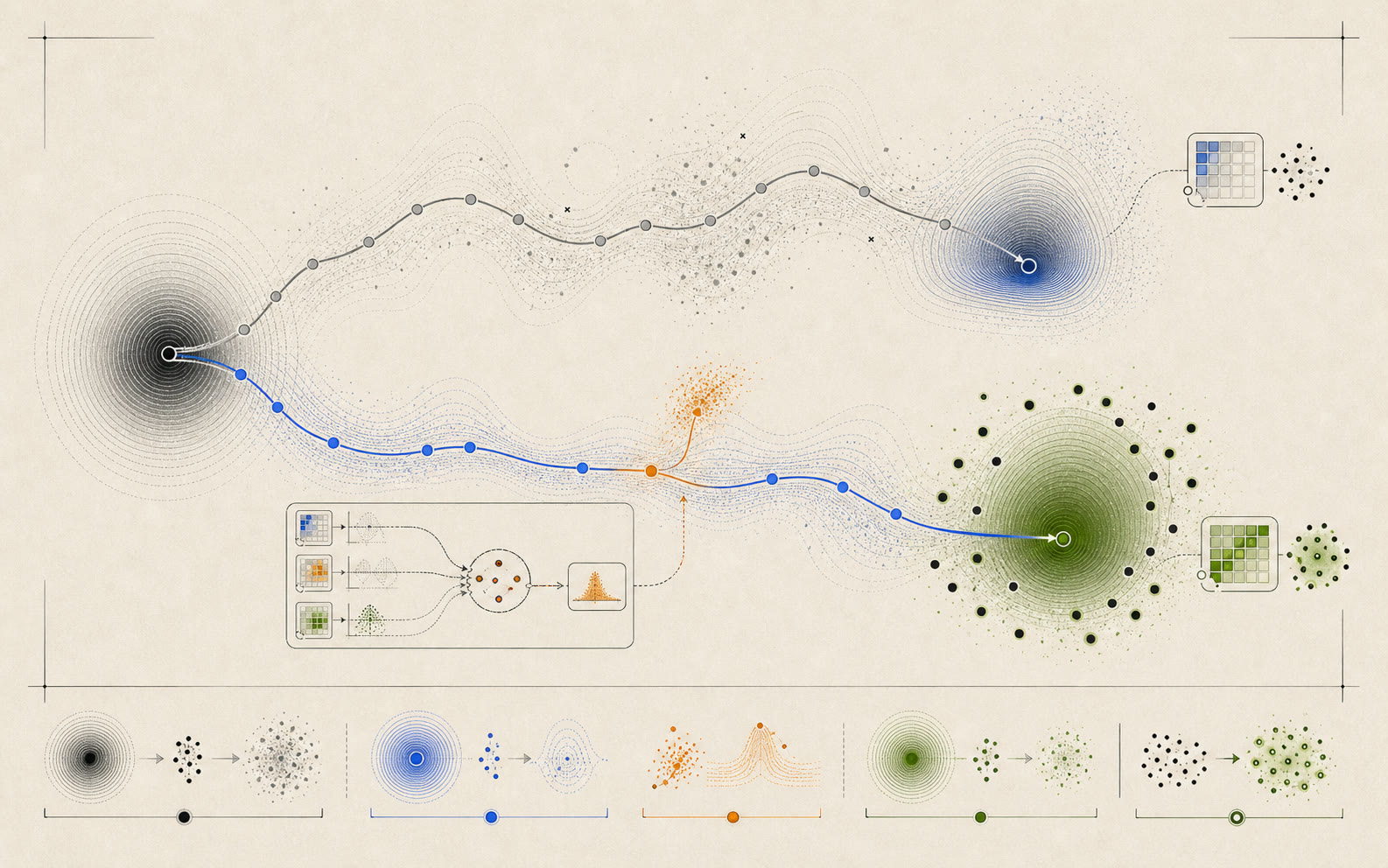
What it separates
Execution-aware routing
A transport path should be judged by target behavior, not only by reconstruction closeness.
This work studies universal representations of hidden states among different LLMs. The current direction is an anchored universal transport architecture with a behavior-aware router.
Back to research overview